Understanding Stress
By the end of this section, participants should be able to:
Define stress in simple language.
Understand why the body and mind experience stress.
Differentiate between positive stress and negative stress.
Understand eustress and distress.
Recognize that some amount of stress can improve performance.
Identify when stress starts becoming harmful.
Begin observing their own stress responses.
what is Stress?
“When you hear the word STRESS, what is the first thing that comes to your mind?”
Work pressure
Money
Family
Deadlines
Boss
Exams
Relationships
Health
Lack of time
Traffic
Expectations
Simple definition
Stress is the physical, mental and emotional response we experience when we perceive that the demands placed on us are greater than our ability or resources to handle them.
In very simple words:
Stress is the body's and mind's response to pressure or challenge.
Situation is the same, but their perception and response are different.
This gives you an excellent bridge to self-awareness.
Stress Is Not Always Bad
This is an important concept.
some level of stress is necessary.
A little pressure may make the student:
Study seriously
Avoid distractions
Focus better
Manage time
Complete preparation
The objective isn't necessarily to eliminate all stress.
The real objective is:
To recognize stress, understand it and manage it before it starts managing us.
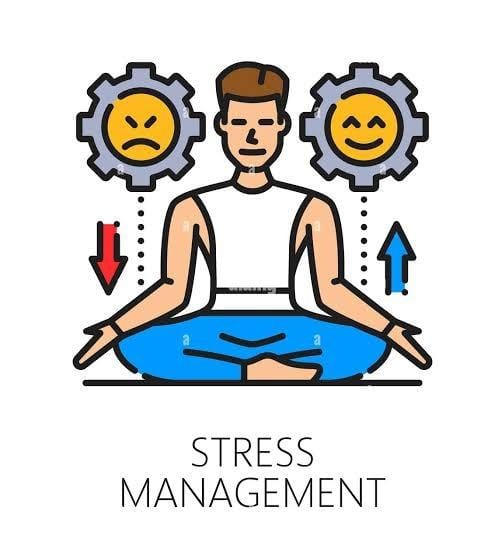
Positive Stress – Eustress
The term eustress refers to stress that can be motivating or beneficial.
Preparing for an important presentation
Starting a new job
Participating in a competition
Planning a wedding
Giving an interview
Taking on a challenging project
Learning a new skill
Challenge → Focus → Energy → Action → Achievement
More alert
More focused
More energetic
More prepared
This is manageable stress.
Negative Stress – Distress
When stress becomes excessive, prolonged or difficult to manage, it can become distress.
Contiuous workload without recovery
Constant financial worries
Persistent interpersonal conflict
Lack of sleep
Feeling unable to cope
Continuous pressure without adequate resources
It may affect:
Body
Headaches
Muscle tension
Fatigue
Sleep problems
Changes in appetite
Increased physical tension
Mind
Difficulty concentrating
Overthinking
Negative thinking
Poor decision-making
Feeling overwhelmed
Emotions
Irritability
Frustration
Anxiety
Feeling helpless
Mood changes
Behaviour
Withdrawal
Procrastination
Increased arguments
Reduced productivity
Unhealthy coping habits
Eustress vs Distress
Eustress Distress
Motivates us Drains us
Short-term Can become prolonged
Creates alertness Creates overwhelm
Encourages action Can lead to avoidance
Improves focus Can reduce concentration
Feels like a challenge Feels like a threat
Can improve performance Can impair performance
The Stress Response: Fight, Flight & Freeze
Fight
Anger
Argument
Aggression
Confrontation
Flight
Possible behaviour:
Avoiding the problem
Escaping
Procrastinating
Withdrawing
Freeze
Possible behaviour:
Feeling stuck
Going blank
Difficulty making decisions
Inaction
Stress Is a Mind–Body Connection
Thought
Emotion
Anxiety / frustration
Body
Muscle tension + faster heartbeat
Behaviour
Irritability / rushing / avoidance
Result
More mistakes or conflict
Thought
More stress.
The Stress Cycle
STRESSOR
THOUGHT / PERCEPTION
EMOTIONAL RESPONSE
PHYSICAL RESPONSE
BEHAVIOUR
CONSEQUENCE
MORE STRESS
Stressor vs Stress
Stressor
The event, situation or demand that creates pressure.
Deadline
Traffic
Argument
Financial problem
Heavy workload
Stress
Your manager gives you a deadline.
“Is Stress Good or Bad?”
this likely to be:
Eustress?
Distress?
Depends on the person/situation?
Then discuss their reasoning.
Stress isn't simply good or bad. Its effect depends on the intensity, duration, situation and how we respond to it.
 September 04, 2026