Dussehra: Conquering the Ravana Within and Protecting Your Peace
Dussehra is a festival that reminds us of the victory of good over evil, truth over falsehood, and wisdom over ego. But its message is not limited to the burning of Ravana's effigy. It also invites us to reflect on the negative patterns within ourselves and the difficult behaviours we sometimes encounter in our families.
Sometimes, the real challenge is not defeating an enemy outside us, but learning how to respond wisely to the negativity of someone close to us.
In a family, this can be particularly painful. We may love a person, respect the relationship, and still feel emotionally exhausted by their behaviour.
What are the characteristics of a person with a negative mindset?
1. Always finds faults
Such a person focuses on mistakes, criticises others frequently, and may overlook their positive efforts.
2. Plays the blame game
They find it difficult to accept responsibility and may make other people feel guilty for problems they did not create.
3. Wants to control situations
They may expect family members to follow their wishes and become upset when others make independent decisions.
4. Struggles to appreciate others
Another person's success, happiness, confidence or recognition may be met with criticism, comparison or dismissive remarks.
5. Uses guilt or emotional pressure
Statements such as “After everything I have done for you” may be used to influence another person's decisions.
6. Avoids listening and understanding
They may interrupt, dismiss feelings, or insist that their interpretation is the only correct one.
7. Creates repeated tension
Small disagreements may turn into prolonged arguments, silent treatment, or conflicts involving other family members.
These behaviours can be harmful, especially when they occur repeatedly. However, a person displaying negativity is not necessarily a narcissist. Stress, insecurity, learned behaviour and unresolved conflicts can also contribute to difficult interactions.
2. How does narcissistic behaviour differ from ordinary negativity?
The word narcissist is often used casually, but narcissistic personality disorder is a clinical diagnosis that requires assessment by a qualified mental health professional.
Some patterns associated with pronounced narcissistic traits include:
A strong need for admiration: expecting praise, attention or special treatment.
A sense of entitlement: believing that their needs should take priority over others'.
Limited empathy in certain situations: struggling to acknowledge another person's emotional experience.
Difficulty accepting criticism: responding with anger, contempt, denial or retaliation.
A need to maintain control or superiority: attempting to dominate conversations or undermine others.
Limited accountability: repeatedly shifting blame instead of sincerely addressing the harm caused.
The important point is not to diagnose your family member. It is to recognise the behaviour, understand its impact on you, and decide what boundaries you need.
3. How can we apply the message of Dussehra to difficult family relationships?
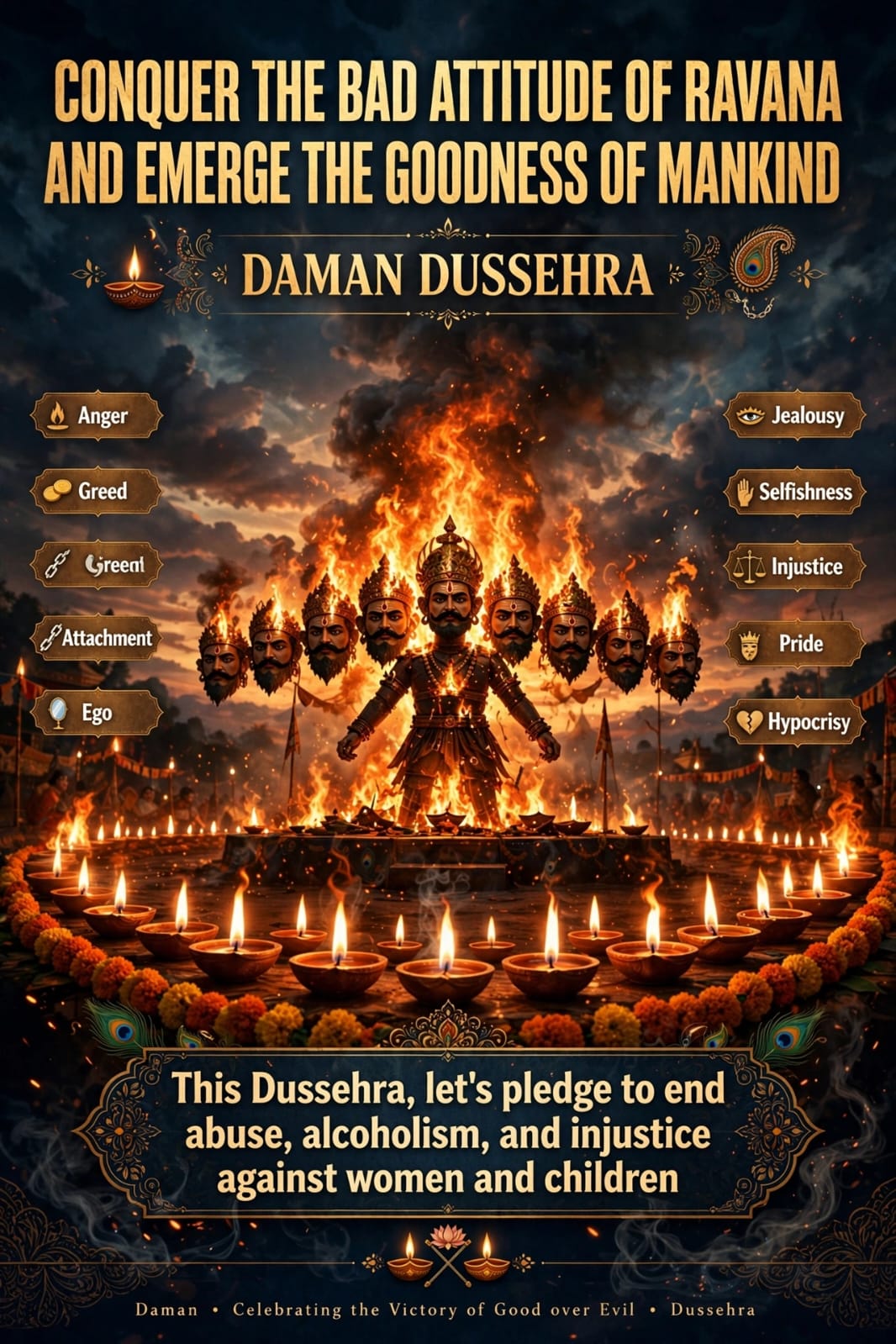
Think of Ravana's ten heads as a symbolic reminder of the negative patterns that can disturb family harmony. Instead of trying to change another person by force, we can begin by changing how we respond.
Burn the anger, not your self-respect
Do not allow another person's harsh words to determine your emotional state. Pause before responding. You can be firm without becoming aggressive.
Replace revenge with emotional maturity
You do not need to humiliate someone to prove your worth. Respond to the issue rather than attacking the person's character.
Protect your peace with boundaries
Love does not require you to tolerate insults, manipulation, humiliation or repeated disrespect.
Choose growth over proving yourself
You may never receive an apology or acknowledgement from the person who hurt you. Your growth should not depend entirely on their approval.
4. Practical ways to manage a difficult or narcissistic family member
Here are six strategies you can practise in daily family life.
1. Stop expecting every conversation to end in agreement.
Some people are not ready to listen, particularly when they feel criticised. Explain your position calmly once or twice. You do not have to keep defending yourself indefinitely.
2. Use short, clear responses.
Avoid lengthy explanations when the conversation repeatedly becomes an argument.
3. Set boundaries and follow through.
A boundary describes what you will do, not what you can force another person to do.
When calmly follow through.
4. Do not participate in every provocation.
If someone makes a sarcastic remark, you can choose not to react immediately. Silence can be useful when it is a deliberate pause, rather than a way of suppressing fear or accepting mistreatment.
5. Maintain your independent emotional life.
Keep up your friendships, meaningful activities, personal goals, exercise, rest and supportive relationships. A difficult family dynamic should not consume your entire identity.
6. Accept what you cannot control.
You cannot force someone to become empathetic, apologise sincerely or change their personality. You can control your responses, your boundaries and the amount of exposure you accept.
If there is persistent emotional abuse, intimidation, threats or violence, seek support from a trusted person or qualified professional. You do not have to manage serious harm alone.
5. What should you say when a family member behaves negatively?
Here are practical responses for common situations.
Situation Calm but assertive response
They criticise everything you do. “I am open to constructive feedback, but not constant criticism.”
They blame you for everything. “I am ready to take responsibility for my part, but I cannot take responsibility for everything.”
They compare you with others. “Everyone has a different journey. I prefer to focus on my own growth.”
They provoke you into an argument. “I don't want this discussion to become hurtful. Let's pause.”
They dismiss your feelings. “You may see things differently, but my feelings deserve to be heard.”
They use guilt to influence you. “I respect our relationship, but I also need to make decisions responsibly.”
They behave nicely in public but disrespect you privately. “I would like the same respect in private that we show one another in public.”
Remember: assertiveness is not about winning an argument. It is about communicating your position without abandoning your dignity.
6. A Dussehra self-reflection exercise
Before reacting to a difficult family member, ask yourself these five questions.
My Dussehra reflection
Am I responding to the present situation or reacting to accumulated hurt?
Can I express my concern without insulting the other person?
Am I trying to solve the problem or prove that I am right?
What boundary would protect my emotional well-being?
What can I release today without compromising my self-respect?
message for Dussehra: Let us conquer negativity without becoming negative This Dussehra, Let Us Burn the Ravana Within! 🔥
Dussehra is not merely about burning an effigy. It is an opportunity to reflect on the negativity that can exist within ourselves and the relationships around us.
Sometimes, the biggest challenges come from people within our own families.
Constant criticism, ego, blame, manipulation, jealousy and the desire to control others can disturb our peace of mind and weaken family relationships.
But remember:
You cannot change everyone, but you can change how you respond.
You do not need to win every argument to protect your dignity.
You can love your family without accepting every behaviour.
You can forgive without forgetting the lessons you have learned.
You can maintain boundaries without hatred.
You can choose peace without surrendering your self-respect.
The real victory is when someone else's negativity no longer controls your thoughts, decisions and happiness.
This Dussehra, let us burn the ego that prevents understanding, the anger that destroys relationships, the jealousy that steals happiness, and the fear that stops us from standing up for ourselves.
Conquer negativity with awareness. Conquer conflict with wisdom. Conquer ego with humility. And protect your peace with self-respect.
May this Dussehra bring wisdom, courage, healthier relationships and joyful living into our lives.
One final thought: family harmony does not mean keeping everyone happy at your own expense. Healthy relationships require mutual respect, accountability and a willingness to change.
Happy Dussehra!
The real Ravana Dahan begins when we conquer the negativity within ourselves that hurts others.
As a Soft Skills Trainer associated with EMRI Green Health, 112 Janrakshak and 181 Abhyam services, I have come to appreciate the importance of communication, emotional intelligence, self-control and responsible behaviour in building a safer and more respectful society.
These services stand for more than emergency response and assistance. They remind us how important it is to protect people, respect human dignity and extend support when someone needs help.
But this Dussehra, I find myself reflecting on a deeper question:
Are we celebrating the burning of Ravana outside while allowing anger, ego, jealousy, hatred and insensitivity to grow within us?
The negativity we carry in our minds can hurt people through our words, actions, attitudes and behaviour. Sometimes, we hurt our own family members, colleagues and loved ones without even realising the emotional impact of our actions.
What if this Dussehra, we decide to burn:
The ego that stops us from accepting our mistakes.
The anger that turns a conversation into a conflict.
The jealousy that prevents us from appreciating others' success.
The insensitivity that makes us ignore another person's pain.
The prejudice that makes us judge people without understanding them.
The controlling attitude that denies others their dignity and freedom.
The negativity that destroys trust and peace within families and society.
As a soft skills trainer, I strongly believe that emotional intelligence, empathy, respectful communication and self-regulation are not merely professional competencies; they are essential life skills.
A truly strong person is not the one who dominates others, but the one who can manage their own emotions.
A truly successful person is not the one who wins every argument, but the one who knows when to listen, understand, apologise and change.
And a truly progressive society is not one that celebrates festivals alone, but one that practises their values in everyday life.
This Dussehra, let us become more conscious of our thoughts, more responsible for our words and more compassionate in our actions.
Let the real Ravana Dahan begin within us.
Because when we conquer the negativity within, we create safer homes, healthier workplaces and a more respectful society.
Happy Dussehra! May goodness prevail not only around us, but also within us.
 October 20, 2026